The Story of the Persian Who Changed the Course of Islam
The Thirst That Persian Wells Could Not Quench
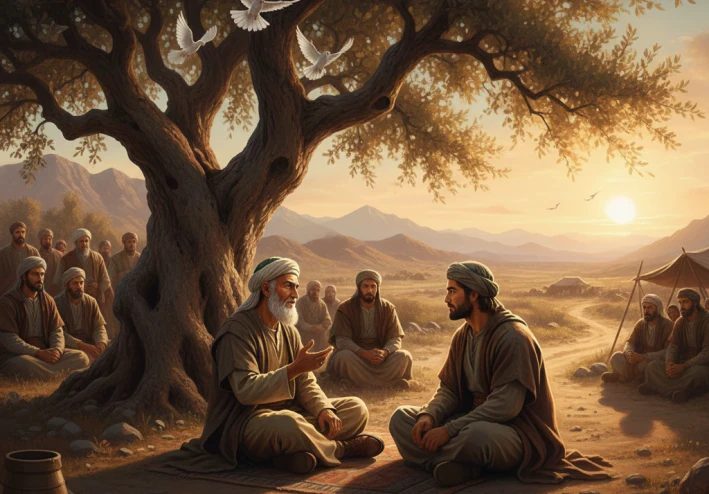
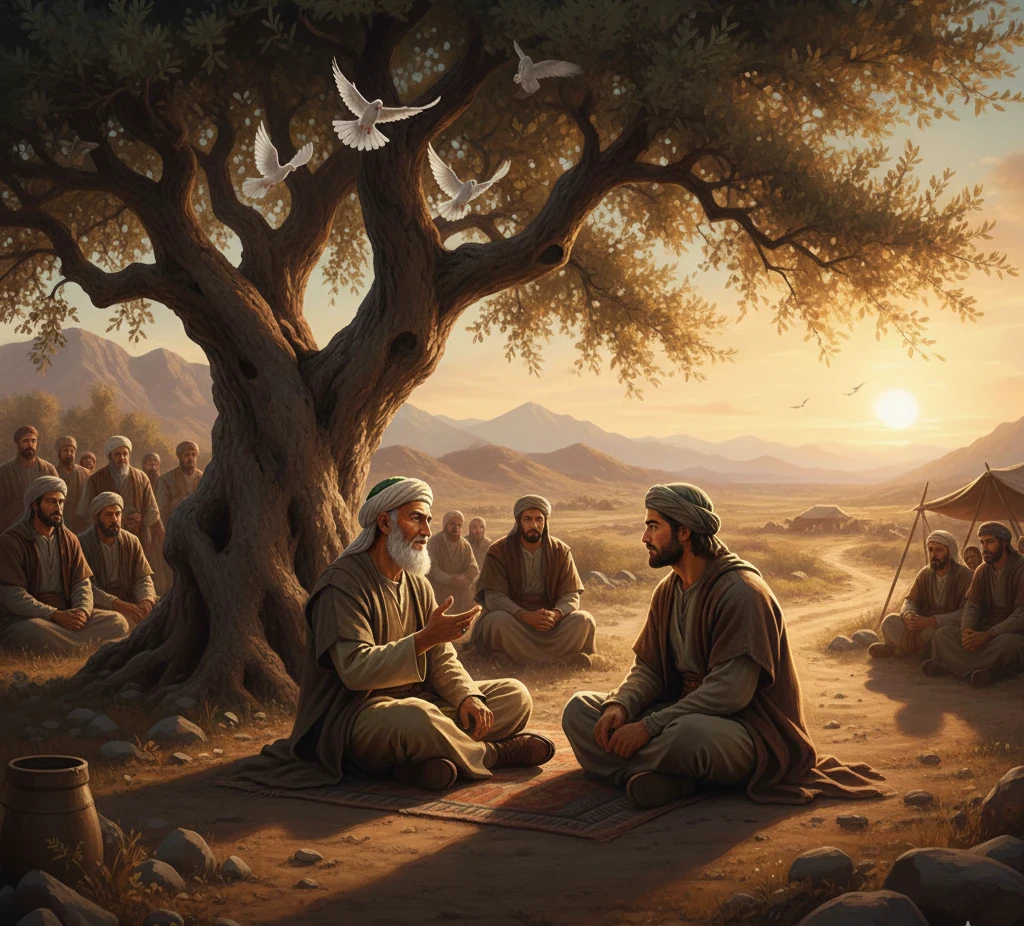
Salman al-Farsi – may God be pleased with him – was not searching for a treasure of gold or fleeting glory when he left his father's wealthy palace in "Jayy" in Persia. His heart was agitated by questions like volcanoes: Who created this marvelous universe? And what is the purpose of this life? He had drunk from all the knowledge of the Persians, read the prophecies of the Magians, and contemplated the fire of the temples until its embers died in his chest, finding in them only ashes. A spiritual thirst that the philosophy of the Greeks nor the rituals of the Persians could quench. Thus began his journey that led him – after long hardship – to the land of the Arabs, a sold slave, but free in heart, awaiting the tidings of the Final Prophet he had read about in the sacred books.
Under the Shade of the Palm Tree
On a scorching day in Prophetic Medina, while Salman was working for his Jewish master, news reached him of the emergence of a man in Mecca calling to a new religion. So he saved some of his dates and went out in search of the truth. And there, at the outskirts of Medina, he saw a sight he would never forget as long as he lived.
He saw the Messenger of God ﷺ planting a palm tree with his noble hand, his companions working around him. Salman approached, carrying with him that humble dowry – a handful of dates – and offered it to him, saying: "Give this in charity." The Prophet ﷺ took the dates and distributed them among all present, not a single date remained, but his smile remained. Then a poor man came asking, and the Prophet had nothing to give him, so he said to the Companions: "Who will host this man?" Salman – who was still a stranger – stood up and said: “I will, O Messenger of God.”
That night, under a sky studded with stars, in a humble house, Salman sat with his guest. Salman looked at the forehead of the Messenger of God ﷺ gleaming in the lantern light, as if he saw the seal he had read about in the books of the rabbis. Here, the barrier of doubt broke, and the years of wandering collapsed. Salman asked: Do you testify that there is no god but Allah and that you are the Messenger of Allah? The Prophet ﷺ answered: "Yes." Then Salman's tears poured forth, tears of joy after a long wait, and the blood of wounds after years of hardship. He said: “I testify that there is no god but Allah, and I testify that you are the Messenger of Allah.”
From Slavery to True Freedom
But the obstacle still remained: Salman was a slave. When the Prophet ﷺ learned of his situation, he said to him those words that changed the course of history: "Write your freedom, O Salman." Meaning, make an agreement with your master on an amount to buy your freedom. His Jewish master agreed that Salman would plant three hundred palm trees for him and give him forty ounces of gold.
Here, the second miracle occurred. The Prophet ﷺ came himself and planted those palm trees with Salman using his noble hands. And Salman would later swear: "Not a single one of them died." As for the gold, God's treasures came from where he did not expect: The Messenger of God ﷺ sent Salman a ball of gold from the spoils of one of the battles and said: "Fulfill your obligation, O Salman." So he paid his debt and was freed.
The Wisdom of the Persian in the Fortress of the Muslims
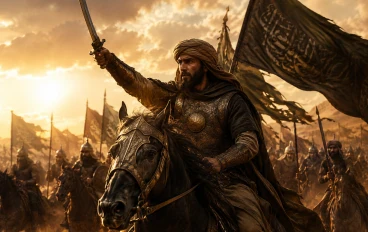
Salman's liberation was not merely the salvation of a man; it was an opening for Islam. At the time of the Trench, when the armies of the Confederates besieged Medina, Salman remembered the digging technique he had seen in Persia. He stood before the Prophet ﷺ and suggested the idea of digging a trench. The Companions – sons of the desert – looked at the idea with bewilderment: "What is this, O Salman? This is something the Arabs have not known." But the Prophet ﷺ, the Wise One who knows the value of wisdom wherever it is found, said: "Salman is one of us, the People of the House." And he ordered the digging.
And so the trench was dug, changing the strategy of war in the Arabian Peninsula forever. Salman, with his Persian wisdom and his Arab-Islamic heart, was a bridge between civilizations, and proof that Islam does not nullify wisdom, but refines it and guides it.
Author's Conclusion
The story of Salman al-Farsi– as I see it – was more than a story of religious conversion. It was proof that the heart seeking truth, no matter how far the paths take it, God will guide it to His light. And that the nation which absorbs the wisdom of the Salmans and embraces their sincerity is the nation worthy of carrying the message of Islam to all worlds.