The Battle of Khaybar: Prophetic Planning, Dialogue with the Companions, and Leadership Lessons from the Heart of the Event
The Battle of Khaybar: Prophetic Planning
Dialogue with the Companions, and Leadership Lessons from the Heart of the Event
The Battle of Khaybar took place in the seventh year of the Hijra and was a pivotal moment in the history of the nascent Islamic state. Khaybar was a region filled with strong fortresses and inhabited by Jews known for their strategic planning and fortifications. They had played a role in inciting tribes against the Muslims after the Battle of the Trench (Battle of the Confederates), making dealing with them a security and political necessity, not merely a military confrontation.
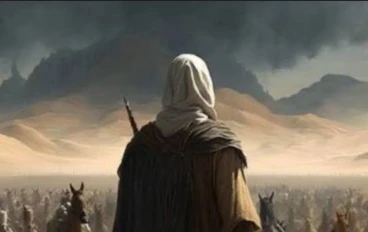
The Prophet (peace and blessings be upon him) marched out with a well-organized army. The objective was not simply to fight, but to neutralize a persistent source of danger. From the Prophet's biography, we observe that he did not act emotionally, but rather with the wisdom of a leader who knew when to act and when to wait. When the Muslims reached Khaybar at night, the Prophet (peace and blessings be upon him) said to his companions:
"God is the Greatest! Khaybar is ruined! When we descend upon a people's territory, evil will be the morning of those who have been warned."
This was a psychological declaration, preceding the military one, intended to break the enemy's morale before the engagement.
The Leader's Dialogue with the Companions
At the beginning of the battle, the Muslims faced difficulty in capturing some of the fortresses. Here, a very important leadership stance becomes apparent. The Prophet (peace and blessings be upon him) said:
“Tomorrow I will give the banner to a man who loves God and His Messenger, and whom God and His Messenger love. God will grant victory through him.”
The Companions spent the night wondering: Who will it be? Each one of them wished to attain this honor. In the morning, the Prophet (peace and blessings be upon him) asked:
“Where is Ali ibn Abi Talib?”
They replied: “He is suffering from an eye ailment, O Messenger of God.”
So he was brought to him, and the Prophet (peace and blessings be upon him) wiped his eyes with his saliva and prayed for him, and he was cured as if he had never been ill.
Then a very practical conversation took place between them, demonstrating the wisdom of a leader, not mere words. Ali (may God be pleased with him) said:
“O Messenger of God, should I fight them until they become like us?”
The Prophet (peace and blessings be upon him) replied:
“Proceed at your own pace, then invite them to Islam and inform them of their obligations. For, by God, if God were to guide one man through you, it would be better for you than possessing red camels.”
Here is an important lesson: The goal was not killing, but rather guidance and skillful control of the situation.
The Conquest of the Fortresses and the Realistic Stance
Ali (may God be pleased with him) advanced steadily, and the psychological battle began before the swords were drawn. The Jews would come out for single combat, and each time the Muslims advanced, they did so with a plan, not haphazardly. From the leadership experience in the Prophet's biography, we observe that he (peace and blessings be upon him) did not push the army all at once, but rather conquered each fortress according to its circumstances, thus minimizing losses and increasing discipline.
Even in the distribution of the spoils, there was order and justice; matters were not left to chaos. This reflects that the Battle of Khaybar was not merely a military victory, but the establishment of a model for an organized state.
Clarification of the Hadith “Count six signs before the Hour”
Many people confuse the Battle of Khaybar with the Prophet’s (peace and blessings be upon him) hadith:
“Count six signs before the Hour…”
Among them are: the death of the Prophet (peace and blessings be upon him), the conquest of Jerusalem, and the emergence of tribulations.
This account is not from the events of Khaybar itself, but it is sometimes mentioned in the context of the Prophet's biography to highlight his ﷺ foresight and how he was training his companions in preparedness, not just in the pursuit of temporary victories.
Practical Lessons from Khaybar
From reflecting on the Prophet's biography, we find that the Battle of Khaybar teaches us:
That leadership begins with dialogue before resorting to weapons.
That planning is more important than enthusiasm.
That true victory lies in guiding minds before breaching fortresses.
And that the Prophet ﷺ managed battles with the mindset of a statesman, not merely a field commander.
Thus, the Battle of Khaybar remains a practical example of how nations are built through wisdom, organization, and justice, not just force.